
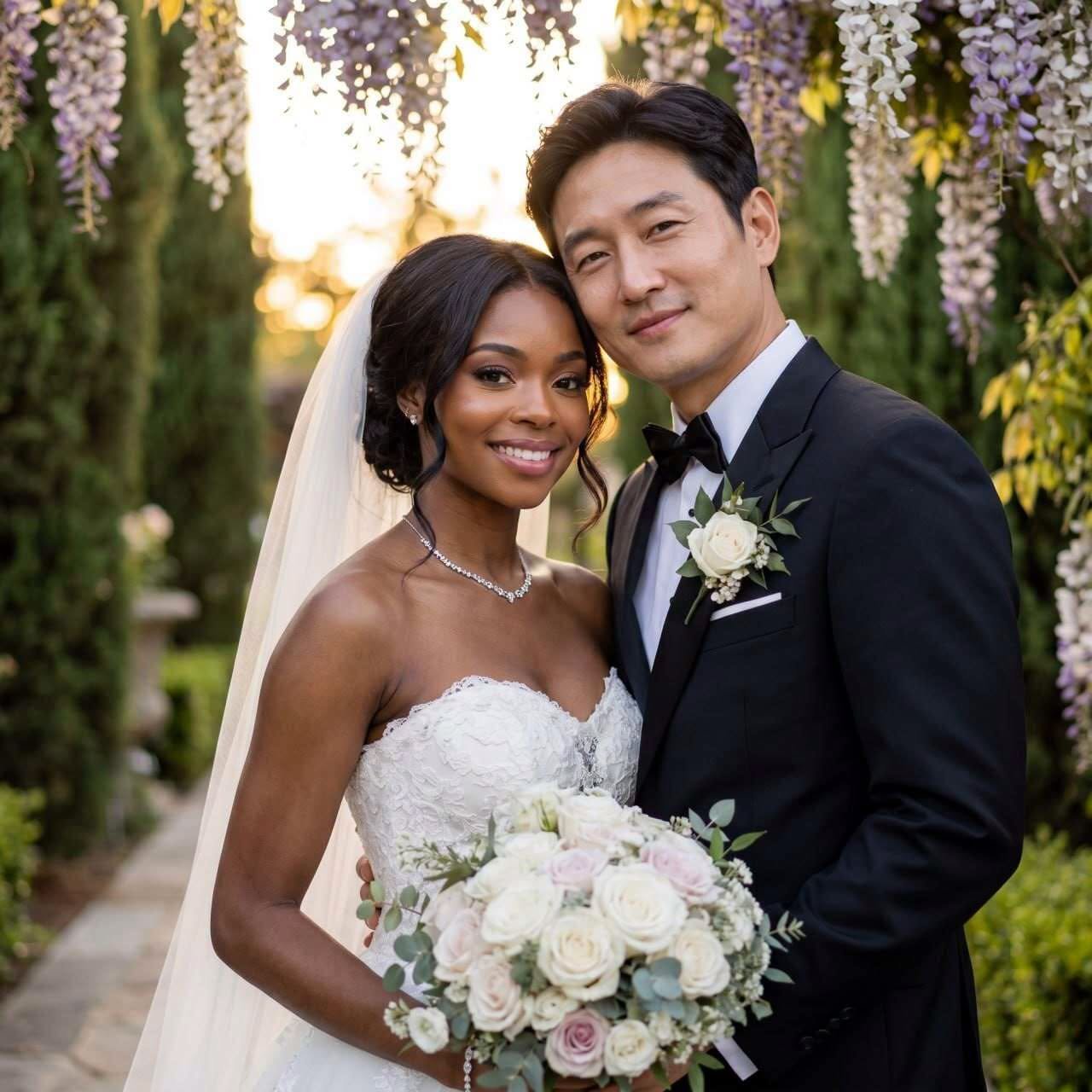
For twelve agonizing years, I believed my daughter had abandoned me for a wealthy life in South Korea. Every year, exactly $8,000 appeared in my bank account, accompanied by the same brief message: “Mom, look after yourself. I’m doing well.” I convinced myself the money was proof that Mary Lou was happy. Then, at sixty-eight, I flew to Seoul without telling her. What I discovered inside her supposedly luxurious home—and the truth behind those annual payments—left me questioning everything I thought I knew about my daughter.
I had spent twelve years pretending not to notice the cracks.
When Mary Lou married Kang Jun at twenty-one, I begged her to reconsider.
He was twenty years older, and something about the relationship frightened me. Mary Lou insisted I was being overprotective.
“He loves me, Mom.”
“And you love him?”
“Yes.”
That was enough for her.
She left for South Korea with two suitcases, a wedding ring, and tears streaming down her face.
I expected her to visit within months.
She never did.
At first, we spoke every weekend.
Then twice a month.
Then once a month.
Eventually, our conversations became five-minute phone calls.
“How are you?”
“Good.”
“Are you happy?”
“Yes, Mom.”
“Is Kang Jun there?”
“He’s busy.”
“Can I speak to him?”
“Another time.”
There was always another time.
And every year, exactly $8,000 arrived in my bank account.
My neighbors noticed.
“You raised such a wonderful daughter,” Mrs. Palmer told me one afternoon.
“She must be doing very well over there.”
I smiled.
“Yes. She is.”
But I didn’t know if that was true.
I renovated my kitchen with her money.
I replaced the leaking roof.
I bought a new sofa.
But none of it made the house feel less empty.
Every Christmas, I cooked Mary Lou’s favorite beef stew.
I placed one extra plate at the table.
Then I eventually stopped.
Not because I stopped loving her.
Because seeing the untouched plate hurt too much.
The strangest thing was the money.
Why exactly $8,000?
Not $5,000.
Not $10,000.
Always $8,000.
The first few years, I assumed she was simply generous.
By the sixth year, I began wondering whether she was trying to compensate for something.
By the tenth year, I was afraid to ask.
Then came the twelfth payment.
I stared at the bank statement for nearly an hour.
For the first time, I didn’t feel grateful.
I felt angry.
If my daughter was so successful, why wouldn’t she come home?
If she loved me, why did she sound terrified every time I asked about her life?
That night, I booked a flight to Seoul.
I didn’t tell her.
The journey was exhausting.
When I finally reached the address Mary Lou had given me years earlier, I expected to find evidence of the life she’d described.
Instead, I found a mansion that looked abandoned.
The gate opened easily.
The front door was unlocked.
“Mary Lou?”
Nothing.
I stepped inside.
The house was immaculate.
Too immaculate.
There were no family photographs.
No wedding pictures.
No children’s toys.
No shoes by the entrance.
The refrigerator contained water bottles and a packet of ramen.
I climbed the stairs.
The first bedroom contained a narrow bed and several identical outfits.
The closet was nearly empty.
There was nothing belonging to Kang Jun.
I opened another room.
Empty.
Then I opened the final door.
And froze.
Boxes covered the floor.
Hundreds of them.
I opened one.
Cash.
Stacks of American hundred-dollar bills.
My hands began shaking.
I opened another.
More cash.
Another.
More.
Thousands upon thousands of dollars.
“What have you done, Mary Lou?” I whispered.
Then the front door opened.
I heard footsteps.
A man’s voice called from downstairs.
“Who’s there?”
I couldn’t move.
The footsteps climbed the stairs.
A tall Korean man appeared in the doorway.
He was perhaps in his forties.
He stared at me.
Then his expression changed completely.
“Are you Mary Lou’s mother?”
“Yes.”
He closed his eyes.
“Oh, thank God.”
I stepped backward.
“Who are you?”
“My name is Daniel Park. I’m a financial investigator.”
My confusion only deepened.
“What is all this money?”
Daniel looked toward the boxes.
“Your daughter has been saving it for you.”
I stared at him.
“For me?”
He nodded.
“Every dollar.”
I shook my head.
“That doesn’t make sense.”
“It will.”
He pulled a chair from the hallway and sat down.
“Your daughter never married Kang Jun.”
My heart stopped.
“What?”
“She was engaged to him.”
“That’s what I told everyone.”
“I know.”
Daniel looked uncomfortable.
“But the marriage never happened.”
“Then where has she been for twelve years?”
He hesitated.
“Working.”
“Doing what?”
“Protecting you.”
Daniel explained that Kang Jun had been deeply in debt.
Before the wedding, Mary Lou discovered that he had accumulated enormous gambling debts and had been using her name to secure loans.
She tried to leave.
That’s when things became frightening.
“He threatened to come after your mother if you exposed him,” Daniel said.
I felt cold.
“He knew about me?”
“Kang Jun had information about your house, your bank, your routine. Mary Lou believed that keeping you unaware was the safest option.”
“So she disappeared?”
“She changed her number. She moved repeatedly. She stopped posting photographs. She built a completely different life.”
I looked at the boxes.
“And the money?”
Daniel gave me a sad smile.
“She works as a senior financial analyst. She’s extremely successful.”
My eyes filled with tears.
“She could have come home.”
“She wanted to.”
“Then why didn’t she?”
Daniel lowered his voice.
“Because for years, she believed Kang Jun was still watching.”
I sank into the chair.
All those Christmases.
All those silent phone calls.
All those times I thought my daughter had forgotten me.
She hadn’t.
She had been afraid.
“What about the $8,000?”
Daniel reached into his briefcase and pulled out a folder.
“That’s the amount she calculated would cover your expenses without attracting attention.”
I opened the folder.
Inside were twelve years of financial records.
Mortgage payments.
Medical bills.
Home repairs.
Insurance.
Groceries.
Even my Christmas spending.
Every transfer had been planned.
“She was paying for your life,” Daniel said. “But she didn’t want you to know why.”
I covered my mouth.
“I thought she didn’t care.”
“She cared so much that she sacrificed her entire relationship with you.”
Then I heard footsteps downstairs.
I turned sharply.
A woman stood at the bottom of the staircase.
Mary Lou.
She looked thinner.
Older.
Exhausted.
But she was my daughter.
For several seconds, neither of us spoke.
Then she whispered:
“Mom?”
I ran down the stairs.
We collided in the middle of the hallway.
She sobbed against my shoulder.
“I didn’t abandon you.”
I held her tighter.
“I know.”
“I wanted to come home.”
“I know.”
“I was terrified he’d find you.”
“I know.”
For twelve years, I had imagined what I would say if she ever returned.
I had prepared accusations.
Questions.
Angry speeches.
Instead, I could only hold her.
“I was so lonely,” I whispered.
She cried harder.
“Me too.”
We stayed like that for a long time.
Eventually, I pulled back.
“Why didn’t you tell me?”
“Because if I told you, you would’ve come looking for me.”
I knew she was right.
“I would’ve.”
She smiled through her tears.
“I know.”
That evening, Mary Lou showed me the rest of the house.
The boxes weren’t filled with stolen money.
They contained everything she had saved for the future.
There were certificates of deposit.
Investment records.
Letters she had written but never sent.
Photographs of me.
Hundreds of them.
She had secretly collected pictures from relatives and old family friends because she couldn’t bear the thought of losing my life completely.
One box contained Christmas cards.
Another contained birthday presents she had purchased for me every year but never mailed.
I opened one.
Inside was a small silver pendant.
“You bought this eight years ago?”
She nodded.
“I couldn’t send it.”
“Why?”
“Because I thought the package might reveal where I was.”
I pressed the pendant against my chest.
My daughter had not forgotten me.
She had been loving me from a distance.
And somehow, that realization hurt almost as much as the years we’d lost.
The next morning, Mary Lou made coffee.
We sat together at the kitchen table.
For the first time in twelve years, there was no rushed phone call.
No “I have to go.”
No scripted answer.
Just silence.
Comfortable silence.
I looked at her.
“Come home with me.”
She smiled.
“I will.”
“Not someday.”
“I know.”
“Soon.”
She reached across the table and took my hand.
“Soon.”
Six months later, the house felt different.
Mary Lou had moved back.
The renovation money she had sent over the years was no longer mysterious.
It was simply part of the life she had quietly protected.
We turned the spare bedroom into an office for her.
The boxes of cash were deposited safely into legitimate accounts after lawyers and financial professionals reviewed everything.
And the pendant she had bought eight years earlier?
I wore it every day.
One afternoon, Mrs. Palmer stopped by.
She looked at Mary Lou standing in the kitchen.
Then she looked at me.
“You never told us she was coming home.”
I smiled.
“She didn’t know when she would.”
Mrs. Palmer hugged her.
“You’re a good daughter.”
Mary Lou glanced at me.
“No,” she said softly.
“I’m just a daughter who finally got to come home.”
That night, we cooked beef stew together.
I set two bowls on the table.
For the first time in twelve years, I didn’t need an extra plate.
My daughter was sitting across from me.
And that was worth far more than $8,000 a year.