
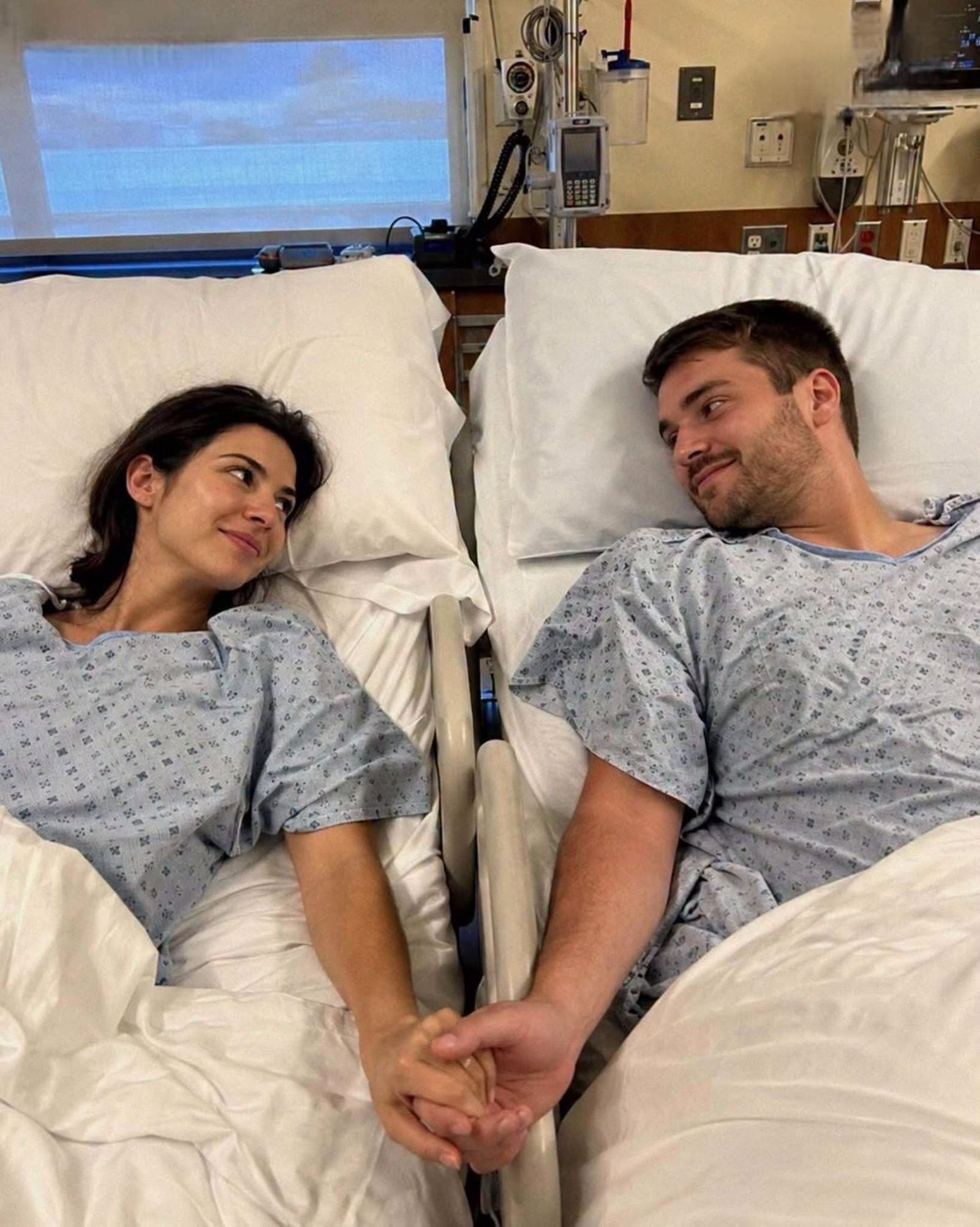
A year ago, I thought receiving a kidney from a stranger was the most unbelievable thing that would ever happen to me.
Then I married him.
And minutes after we said “I do,” Nathan leaned close, took my hand, and whispered six words that made my entire wedding day collapse around me.
“Now I can finally tell you the truth.”
I smiled nervously.
“What truth?”
Nathan looked toward the garden doors.
“I have a daughter.”
My smile disappeared.
“What?”
“Her name is Sophie. She’s twelve.”
I stared at the man who had just become my husband.
“You have a twelve-year-old daughter?”
“Yes.”
“And you never told me?”
His eyes dropped.
“I was going to.”
“You promised me no lies.”
“I know.”
That was the moment I realized the story of how we met wasn’t the whole story.
Not even close.
A year earlier, my kidneys had started failing without warning.
I was thirty-one and healthy enough to believe hospitals were places other people visited.
Then suddenly my life became blood tests, dialysis, medication alarms, and waiting rooms.
My family was tested.
Nobody matched.
My mother cried when she thought I wasn’t looking.
My brother joked that his kidney was “premium stock.”
But none of them could save me.
Then, two months later, my doctor walked into dialysis with an unusual expression.
“We have a living donor.”
I stared at him.
“Who?”
“Nathan.”
The name meant nothing to me.
Three days later, Nathan walked into a hospital conference room carrying two cups of coffee.
“Coffee?”
“Strong.”
He handed me one.
I didn’t drink it.
“Why are you doing this?”
“I heard about you from a mutual friend.”
“You don’t know me.”
“Correct.”
“Then why me?”
He looked down.
“Because I was tested, and I matched. After that, walking away felt like choosing not to help.”
He never gave me a more dramatic explanation.
He didn’t ask for money.
He didn’t want publicity.
He simply kept showing up for the tests.
And eventually, he gave me one of his kidneys.
The transplant worked.
My new kidney started functioning almost immediately.
When I woke after surgery, Nathan was recovering in another room.
Later, he appeared wearing hospital socks and carrying contraband pudding.
“You look terrible,” he said.
“You donated a kidney, not your manners.”
“Those were never eligible.”
I laughed.
Then grabbed my side.
“Don’t make me laugh.”
“Finally. Leverage.”
That was how our friendship began.
After we both recovered, Nathan kept appearing in my life.
Groceries.
Books.
Coffee.
A plant he insisted I could keep alive.
“You saved my life and now you’re assigning homework?”
“Correct.”
“What am I supposed to do with this?”
“Keep the fern alive.”
I nearly killed it.
Somehow, Nathan stayed.
Friendship became affection.
Affection became something neither of us wanted to name.
Then one rainy evening, he came to my apartment without groceries or jokes.
He sat at my kitchen table.
“My doctors found something during my follow-up.”
My heart dropped.
“Because of the donation?”
“No.”
He swallowed.
“It’s cancer.”
The word seemed to drain all the warmth from the room.
“It’s advanced,” he continued. “They don’t know exactly how much time I have.”
I reached across the table.
Nathan took my hand.
“I don’t want to spend whatever time I have left alone.”
“You won’t.”
He gave a sad little laugh.
“Careful.”
Then he pulled a small box from his coat.
“Marry me.”
I stared at him.
“This is insane.”
“Probably.”
“You could be dying.”
“Exactly.”
I walked to the window.
“Do you want a wife, or are you terrified?”
“Both can be true.”
That answer frightened me because it sounded honest.
I turned around.
“I need one promise.”
“Anything.”
“No lies.”
Nathan held my gaze.
“No lies.”
I said yes.
Our wedding was small.
My parents came.
My brother complained about his tie.
Our friend Mara cried before the ceremony even began.
Nathan and I stood beneath the garden lights and exchanged vows.
When the officiant pronounced us husband and wife, everyone applauded.
I turned toward Nathan.
His smile vanished.
He took my hand.
“Now I can finally tell you the truth.”
And then he told me about Sophie.
His twelve-year-old daughter.
The child he had never mentioned.
The child who already knew about me.
The child who believed her father was replacing her.
I felt sick.
“So your daughter knew I existed while I didn’t know she did?”
“I was going to tell you.”
“When?”
He didn’t answer.
“Why did you wait until after we were legally married?”
Nathan rubbed his face.
“I thought if we were married, Sophie would understand you weren’t temporary.”
I stepped back.
“You married me to solve a problem with your daughter?”
“No.”
“You used our wedding to force an introduction.”
“No. I married you because I love you.”
“But you took away my choice.”
He couldn’t argue with that.
So I left the reception.
Not the marriage.
Just the room.
I drove to Sophie’s grandmother’s house in my wedding dress.
Sophie didn’t want to meet me.
I understood.
I sat outside anyway.
Eventually the door opened.
A girl with Nathan’s eyes stepped onto the porch.
“This is weird,” she said.
“Probably.”
“Did you marry my dad because you felt sorry for him?”
“No.”
“Then why did he give you part of himself before he even knew you?”
I didn’t know how to answer.
So I told her the truth.
“I think your dad believes love means fixing things for people.”
She frowned.
“He fixes everybody’s problems.”
“I know.”
“He never asks what it costs us.”
That sentence stayed with me.
Because I had fallen in love with exactly that quality.
Nathan gave without asking.
He sacrificed without hesitation.
But Sophie had lived with the consequences of his decisions.
“He should have told me about you,” I said.
“Obviously.”
“And he should stop deciding what everyone needs without asking them.”
Sophie gave a tiny laugh.
“Good luck.”
When I returned to the wedding venue, everyone was still there.
Nathan stood by the garden doors.
My mother approached me.
“What happened?”
I looked at Nathan.
“Tell them.”
He went pale.
“Claire—”
“You wanted to decide when everyone learned the truth. You don’t get to do that anymore.”
Nathan finally faced my family.
“I have a twelve-year-old daughter,” he said. “And I married Claire without telling her.”
Silence.
My father stepped forward.
“Why?”
Nathan looked down.
“I told myself I was protecting Sophie. Then I told myself I was protecting Claire.”
He swallowed.
“Really, I was making sure nobody had the chance to tell me no.”
Nobody defended him.
My mother folded her arms.
“Then give her the choice back.”
Nathan looked at me.
“Claire, do you want me to leave?”
“No.”
His expression changed.
“But you’re going to learn to ask.”
He nodded.
“I will.”
The months afterward weren’t easy.
Sophie didn’t suddenly become my best friend.
She called me Claire.
Sometimes she stayed with us.
Sometimes she didn’t want to visit.
Nathan had to learn that being a good father didn’t mean controlling every situation.
He had to stop deciding what Sophie could handle.
He had to stop deciding what I needed.
He had to learn that honesty wasn’t something you offered after making the important decisions.
It came first.
His cancer treatment was difficult.
Some appointments brought hope.
Others brought uncertainty.
But one thing changed.
Nathan stopped treating fear as permission to make everyone’s choices for them.
One summer afternoon, Sophie gave me a wrapped present.
Inside was a cheap mug.
WORLD’S MOST COMPLICATED STEPMOM.
I laughed.
Nathan pointed at her.
“You bought that?”
She smiled.
“Of course.”
Then she handed Nathan another one.
His said:
ASK YOUR FAMILY FIRST.
He groaned.
“Fair.”
“Very fair,” Sophie said.
She stole a strawberry from his plate.
I leaned against Nathan’s shoulder.
He looked at Sophie, then at me.
For once, he wasn’t trying to save anyone.
He wasn’t hiding anything.
He wasn’t making decisions on our behalf.
He was simply sitting there with his family.
And I finally understood the real lesson of the kidney he had given me.
A gift can save a life.
But love isn’t measured by how much you’re willing to sacrifice for someone.
Sometimes, the hardest act of love is much simpler:
Tell the truth. Ask first. And let the people you love choose what happens next.