
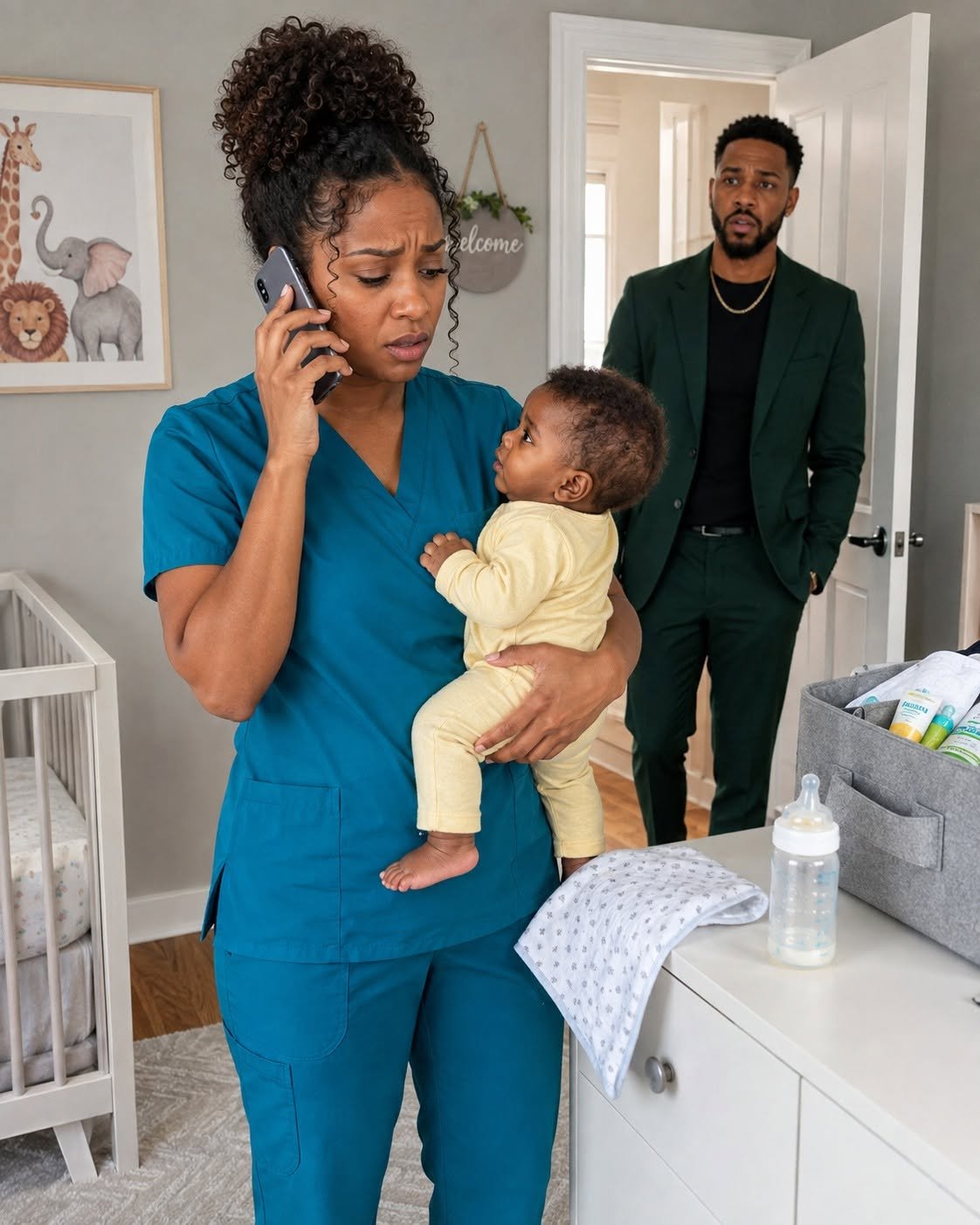
PART 1 — THIRTY-ONE DOLLARS
Nathan Calloway had signed contracts worth more money before breakfast than most people would earn in several lifetimes.
At forty-one, he was CEO of Calloway Civil Group, one of the largest privately owned construction and engineering firms on the East Coast.
His company built hospitals.
Bridges.
Luxury towers.
Transportation terminals.
His name appeared on university buildings, charity foundations, and plaques inside city halls.
Nathan lived alone in a twelve-bedroom estate outside Greenwich, Connecticut, where the monthly landscaping bill exceeded the annual salary of some of his employees.
Money was everywhere in his life.
So much of it that numbers had stopped feeling real.
Until one Thursday morning, he heard someone whispering about thirty-one dollars.
Nathan had just stepped out of his home office when he heard a woman’s voice coming from the kitchen.
His housekeeper, Leah Morgan.
She had worked for him for eight months.
Quiet.
Dependable.
Always early.
Never asked for anything.
Nathan knew she had a baby.
That was almost everything he knew.
He was about to walk into the kitchen when he heard her say:
“Mom, please. I wouldn’t ask if I had another option.”
Nathan stopped.
Leah’s voice was low.
Embarrassed.
“I only need thirty-one dollars.”
Silence.
Then:
“No, don’t skip your prescription again.”
Nathan frowned.
Leah continued.
“Noah’s formula won’t last until payday. I thought I could stretch it, but he’s been eating more this week.”
Another pause.
“I’ll figure it out.”
Her voice cracked.
“No, Mom. Keep your grocery money. Seriously. I’ll figure something out.”
Nathan remained in the hallway.
Thirty-one dollars.
The previous evening, he had paid forty-eight dollars for a glass of bourbon at a Manhattan restaurant and barely looked at the bill.
Inside the kitchen, Leah sniffed quietly.
“I get paid Monday. I just need to make it four days.”
Nathan stepped backward before she noticed him listening.
He returned to his office.
Closed the door.
Then stared at the financial report open on his laptop.
Projected quarterly revenue:
$186 million.
The number suddenly looked obscene.
Nathan opened a browser.
He searched:
How much does baby formula cost?
Then diapers.
Then childcare.
Then rent in the Stamford area.
Then electricity.
Transportation.
Food.
Health insurance.
He found himself making a spreadsheet.
It was ridiculous.
Nathan Calloway, whose finance department employed forty-three people, was calculating the survival budget of a woman who cleaned his kitchen.
Then he pulled up Leah’s employment record.
Hourly wage.
Weekly hours.
Taxes.
Transportation deductions.
Nathan did the math.
Once.
Then again.
There was no mistake.
If Leah paid average rent and basic childcare, she was nearly broke before buying food.
He sat back.
“How?”
He kept scrolling.
Employment:
Eight months.
Late arrivals:
Zero.
Unexcused absences:
Zero.
Complaints:
Zero.
Emergency contact:
Margaret Morgan.
Dependent:
Noah Morgan, ten months old.
Then Nathan reached the marital-status field.
Widowed.
He stopped.
He hadn’t known.
That bothered him more than he expected.
He saw Leah almost every day.
She cleaned the house where he slept.
Washed the cups he drank from.
Changed the sheets in his guest rooms.
Yet he did not even know that the father of her child was dead.
At eleven thirty, Nathan called the agency that managed household staff.
“Why is Leah Morgan earning this rate?”
The coordinator hesitated.
“It’s the standard placement rate.”
“Standard according to whom?”
“Mr. Calloway?”
Nathan looked at the spreadsheet.
“Review every domestic employee attached to this property.”
“Is there a problem?”
“Yes.”
“What kind?”
“I’ve been paying people without knowing whether they can afford to live.”
There was silence on the other end.
Nathan ended the call.
But the conversation stayed with him all afternoon.
At five thirty, he canceled dinner with two investors.
Then did something his driver found extremely strange.
Nathan asked to be taken to a grocery store.
He spent twenty minutes standing in the baby aisle.
There were six kinds of formula.
Different stages.
Different sizes.
Different labels.
Nathan called his sister, who had three children.
“What formula does a ten-month-old drink?”
She laughed.
“Is there something you need to tell me?”
“No.”
“Whose baby?”
“My housekeeper’s.”
Silence.
“That answer created more questions.”
“I’ll explain later.”
He bought two containers.
Then diapers.
Baby food.
Rice.
Eggs.
Chicken.
Vegetables.
Milk.
Coffee.
He nearly filled the cart.
Then he stopped.
He suddenly realized how humiliating this might feel.
Leah had never asked him for charity.
He removed half of it.
Not because she didn’t need it.
Because he didn’t want to arrive looking like some billionaire performing generosity.
Nathan paid.
Then gave his driver an address.
Leah Morgan lived thirty-five minutes from Nathan’s estate.
It might as well have been another country.
PART 2 — THE APARTMENT
The building was a faded three-story brick structure above a laundromat.
Children’s bicycles were chained to the railing.
A handwritten notice in the lobby warned tenants that the elevator was broken again.
Nathan carried two grocery bags upstairs.
By the second flight, one paper handle began tearing.
He almost laughed.
He had spent his adult life discussing infrastructure while apparently being defeated by groceries.
Apartment 3B.
He knocked.
A baby cried inside.
Footsteps approached.
Leah opened the door.
Then froze.
“Mr. Calloway?”
Her face immediately filled with fear.
Nathan hated that reaction.
“Hi.”
She stared at the grocery bags.
“Did I do something wrong?”
“No.”
“I know I left ten minutes early yesterday, but Mrs. Alvarez covered the laundry room and—”
“Leah.”
She stopped.
“You’re not fired.”
Her shoulders loosened slightly.
“Then why are you here?”
Nathan looked at the bags.
“That’s harder to explain without sounding strange.”
He held them out.
“I heard part of your phone call this morning.”
Leah’s face changed instantly.
Not gratitude.
Humiliation.
Nathan wished he could take the sentence back.
“I wasn’t trying to listen.”
She looked away.
“You shouldn’t have come.”
“I know.”
“I don’t need charity.”
“I know that too.”
“Then why?”
“Because a baby shouldn’t run out of food while his mother cleans a house with six refrigerators.”
Leah stared at him.
Nathan glanced past her.
The apartment was tiny.
One bedroom.
A folding crib stood beside the sofa.
Baby clothes hung near a radiator.
A table with two mismatched chairs occupied the kitchen corner.
On the counter sat an almost empty formula container.
Reality hit harder than any spreadsheet.
Leah noticed where he was looking.
She stepped slightly in front of it.
“I get paid Monday.”
Nathan nodded.
“I know.”
“I always manage.”
“I believe you.”
She looked at the grocery bags.
Then at him.
“I’m paying you back.”
“You’re not.”
“I am.”
“Then call it an advance.”
“That’s still humiliating.”
Nathan had no response.
The baby cried again.
Leah turned.
Nathan saw a little boy sitting in a portable crib.
Round cheeks.
Dark curls.
Red pajamas.
“That’s Noah?”
“Yes.”
Nathan smiled awkwardly.
“Hi, Noah.”
The baby stared at him.
Then immediately started crying harder.
Leah almost smiled.
“He doesn’t like strangers.”
“Smart kid.”
For the first time, some tension left the room.
Then Nathan heard footsteps behind him.
A man’s voice came from the stairwell.
“Nathan.”
Nathan turned.
Martin Shaw stood on the landing.
Calloway Civil Group’s general counsel.
He had worked for Nathan’s father for more than twenty years.
Nathan frowned.
“What are you doing here?”
Martin looked past him toward Leah.
Then back at Nathan.
“You need to leave.”
Leah’s expression changed.
Nathan noticed immediately.
She knew him.
“Why?”
Martin lowered his voice.
“This situation involves company history.”
Nathan stared at him.
“What company history?”
“Nathan.”
Martin’s tone hardened.
“This is not something you want to handle in a hallway.”
Leah stepped backward.
Her hand tightened around the door.
Nathan looked at her.
“You know Martin?”
She didn’t answer.
That was answer enough.
“Leah.”
She looked toward her son.
Then finally said:
“You should come inside.”
Martin immediately objected.
“Mrs. Morgan, I strongly advise—”
Leah turned on him.
“You’ve advised enough.”
Martin went silent.
That sentence changed the room.
Leah placed Noah into his crib.
Then walked toward a small closet.
From the top shelf, she pulled down an old metal document box.
She set it on the table.
Opened it.
Inside were photographs.
Letters.
Medical papers.
Printed emails.
Safety reports.
And one faded employee ID badge.
Nathan picked it up.
CALEB MORGAN
Calloway Civil Group.
Nathan looked at Leah.
“Your husband worked for us?”
She nodded.
“Four years ago.”
Nathan stared at the photograph on the badge.
He didn’t recognize him.
Leah saw that.
“Of course you don’t.”
The words weren’t cruel.
That somehow made them worse.
“What happened?”
Leah sat down.
Noah fussed quietly behind her.
“My husband died on one of your projects.”
Nathan stopped breathing.
PART 3 — THE MAN WHO NEVER CAME HOME
The project was called Riverside Exchange.
Nathan remembered it.
A massive mixed-use development outside Newark.
Calloway Civil had finished it four years earlier.
The project had been troubled from the beginning.
Delays.
Cost overruns.
Union disputes.
But Nathan remembered the opening ceremony.
His father had cut the ribbon.
City officials had applauded.
Financial magazines called it a turnaround success.
Nathan had never heard the name Caleb Morgan.
Leah pulled out an email.
“Caleb supervised one of the night crews.”
She slid the page toward Nathan.
“He kept reporting problems with a temporary lifting system they were using.”
Nathan read.
The email requested an immediate replacement of worn restraint equipment.
Another document referenced a delayed purchase approval.
A third warned that part of the operation should be suspended until replacement equipment arrived.
Nathan looked at the date.
Nine days later, Caleb died.
“What happened?”
Leah swallowed.
“Equipment failed during a lift.”
Nathan continued reading.
“He reported this?”
“Repeatedly.”
Martin finally entered the apartment.
“The accident was investigated.”
Leah looked at him.
“Yes.”
Her voice became cold.
“And you told everyone my husband caused it.”
Nathan looked up sharply.
Martin sighed.
“That is not an accurate characterization.”
Leah pulled another file from the box.
“Then explain that.”
The official incident summary listed Caleb Morgan as having failed to follow established safety protocol.
Nathan reread the sentence.
Leah spoke quietly.
“They said Caleb rushed the procedure because the crew was behind schedule.”
“Was that true?”
“No.”
“How do you know?”
“Because Caleb came home angry about it every night.”
She looked toward Noah.
“I was six months pregnant.”
Her eyes filled.
“He kept telling me someone was going to get hurt because management wouldn’t stop the work.”
Martin folded his arms.
“Mrs. Morgan received a settlement.”
Leah turned toward him.
“You offered me a settlement three weeks after I buried my husband.”
Nathan looked at Martin.
“She was pregnant?”
Martin didn’t answer immediately.
Leah did.
“Seven months.”
She reached for another document.
“I sat across from four attorneys.”
Her voice shook now.
“You told me the company would fight for years.”
Martin’s face remained controlled.
“I explained the legal realities.”
“You told me Caleb had ignored instructions.”
“That was the information available.”
“You told me if I rejected the settlement, I could lose everything.”
“You had counsel.”
“I had a legal-aid attorney I met twice.”
Nathan pushed his chair back.
“Martin.”
“Nathan, you weren’t involved.”
“That isn’t what I asked.”
Before Martin could answer, heels clicked in the hallway.
A woman appeared at the open door.
“Nathan.”
His mother.
Victoria Calloway.
Sixty-eight.
Elegant.
Perfect posture.
Gray cashmere coat despite the rain.
Nathan stared at her.
“You too?”
Victoria looked annoyed.
“Martin called me.”
“Why?”
“To prevent you from making a reckless decision.”
Nathan held up Caleb’s email.
“Did Dad know about this?”
Victoria glanced at Leah.
Then at the papers.
“There were many issues on Riverside.”
“That wasn’t my question.”
His mother sighed.
“Your father was CEO. Of course he was briefed on serious incidents.”
“Was he briefed before Caleb died?”
Silence.
Nathan stood.
“Mom.”
Victoria’s eyes hardened.
“You are trying to reduce a complicated project to one tragic event.”
“One tragic event?”
Leah looked at her.
Victoria turned toward Leah.
“And I find it extremely troubling that a widow connected to an old company claim somehow ended up working inside my son’s home.”
Leah’s face flushed.
“I didn’t know he owned Calloway Civil.”
Victoria gave a thin smile.
“You expect us to believe that?”
“I applied through an agency.”
“Convenient.”
Something changed in Leah.
She stood.
“Convenient?”
Nathan looked at her.
Leah pointed toward the nearly empty formula can.
“My husband is dead.”
Her voice was trembling, but she did not lower it.
“I clean houses for a living.”
She gestured around the apartment.
“I count diapers before payday.”
Then she looked directly at Victoria.
“I called my sixty-three-year-old mother this morning because I needed thirty-one dollars to feed my son.”
Silence.
“So please explain which part of my life you find convenient.”
Victoria had no answer.
Nathan stared at his mother.
Then Martin.
Then Caleb’s paperwork.
For perhaps the first time in his life, Nathan understood how many people existed beneath the executive decisions he had spent years treating as abstractions.
Martin spoke quietly.
“Nathan, you were not responsible for Riverside.”
Nathan looked at him.
“Then why are you so desperate for me to stop asking questions?”
Martin’s expression tightened.
“Because reopening old matters can create enormous legal exposure.”
There it was.
Not truth.
Exposure.
Nathan picked up his phone.
He scrolled through contacts until he found a name he hadn’t called in years.
Franklin Hayes.
Former Calloway Civil operations director.
He had abruptly retired after arguments with Nathan’s father.
Nathan never knew why.
Franklin answered on the fourth ring.
“Nathan?”
“Frank.”
“Well, this is unexpected.”
“I need to ask you about Riverside Exchange.”
The line became quiet.
Nathan looked directly at Martin.
“Caleb Morgan.”
Long silence.
Then Franklin said:
“Where did you hear that name?”
“From his widow.”
Another silence.
Finally:
“Then somebody kept the paperwork.”
Nathan’s stomach dropped.
“What does that mean?”
“It means your father hoped that file would stay buried.”
PART 4 — THE FILE THEY BURIED
Nathan put the call on speaker.
Victoria immediately objected.
“Turn that off.”
Nathan ignored her.
“Frank, start from the beginning.”
Franklin exhaled.
“Riverside was three months behind schedule.”
Nathan remembered that much.
“Every week of delay triggered penalties.”
“How much?”
“Hundreds of thousands per day by the end.”
Nathan looked at Martin.
Franklin continued.
“We had equipment that should have been replaced.”
“Caleb reported it?”
“Caleb and two others.”
Leah covered her mouth.
Franklin’s voice became quieter.
“Caleb was the loudest.”
“What happened to the replacement request?”
“It moved through procurement.”
“And?”
“It was delayed.”
“Why?”
“Budget pressure.”
Nathan felt sick.
“Did Caleb ask to stop work?”
“Yes.”
The room went completely silent.
“He requested a partial shutdown until the new restraints arrived.”
Nathan looked at the official report again.
The document said Caleb had failed to follow procedure.
“Then why does the company report say he rushed the lift?”
Franklin did not answer immediately.
“Frank.”
“Because after the accident, people began protecting themselves.”
Victoria closed her eyes.
Nathan stared at her.
“You knew.”
“I knew there were conflicting accounts.”
“No.”
Nathan stepped toward her.
“You knew.”
Victoria lowered her voice.
“Your father believed protecting the company protected thousands of employees.”
Leah let out a disbelieving laugh.
Nathan looked at his mother.
“So Caleb became expendable?”
“That is not what I said.”
“It’s exactly what you said.”
Martin intervened.
“This conversation is becoming emotional.”
Nathan turned on him.
“A man died.”
“Yes.”
“And someone rewrote what happened.”
“We followed counsel—”
“You were counsel.”
Martin stopped.
Nathan suddenly understood.
His father was dead.
Several executives had retired.
Martin remained.
And Martin had personally handled Leah’s settlement.
Nathan walked toward the window.
Outside, rain streaked across the glass.
He could see the laundromat sign below.
Noah made a soft noise in his crib.
Nathan looked back at the baby.
Thirty-one dollars.
That was how this started.
Thirty-one dollars for formula.
And behind it sat a dead man.
A frightened widow.
A company settlement.
And a family reputation worth billions.
Nathan picked up his phone.
“Frank, can you assemble an independent review team?”
Victoria stared at him.
“Nathan.”
He ignored her.
Franklin answered:
“Yes.”
“I want people with no connection to our legal department.”
“Nathan, think carefully,” Martin warned.
Nathan looked at him.
“I’m doing that now.”
He returned to the phone.
“Every Riverside file.”
Franklin hesitated.
“Some may be archived.”
“Recover them.”
“Emails?”
“All of them.”
“Personnel interviews?”
“Yes.”
“Settlements?”
“Every safety-related settlement for the last ten years.”
Martin stood.
“That could expose the company to catastrophic liability.”
Nathan stared at him.
“If the company did something catastrophic, perhaps liability isn’t the problem.”
Victoria’s face hardened.
“Your grandfather built Calloway Civil from nothing.”
Nathan glanced around Leah’s apartment.
At the secondhand furniture.
At baby clothes drying beside the heater.
At documents Caleb’s widow had protected for four years because apparently nobody inside Nathan’s company had wanted them protected.
Then he looked at his mother.
“If our name only survives because people like Leah stay powerless…”
He paused.
“…then maybe the name deserves to be damaged.”
Victoria walked out.
Martin followed.
Before leaving, Martin stopped beside Nathan.
“You have no idea what you’re about to unleash.”
Nathan looked at him.
“No.”
Then he glanced at Caleb’s files.
“But I’m starting to understand what everyone else worked very hard to contain.”
PART 5 — FORTY-EIGHT HOURS
Nathan did not return home that night.
Neither did Leah.
She stayed with her mother and Noah.
Nathan spent the night at Calloway Civil headquarters.
By 6:00 a.m., Franklin Hayes had arrived with an independent forensic team.
By noon, they had recovered archived servers.
By evening, old emails began appearing.
The first confirmed Caleb’s complaint.
The second confirmed a purchase request for replacement lifting restraints.
Then came the message that changed everything.
A regional manager had written:
If we pause this phase now, we lose another week. Continue under enhanced supervision until replacement equipment arrives.
Caleb replied:
Enhanced supervision does not replace safe equipment. I will not tell my crew this is safe when it isn’t.
Nathan read it three times.
Then another email.
Caleb again.
I am formally requesting that the lift operation be suspended.
The request had been denied.
Three days later, the equipment failed.
Caleb died trying to pull a twenty-three-year-old worker away from the collapsing load.
That worker survived.
Nathan leaned back in his chair.
His father’s company report had described Caleb as careless.
The truth was almost the exact opposite.
Caleb had been the one trying to stop the job.
But Riverside was not the end.
It was the beginning.
Franklin walked into Nathan’s office at 2:17 the following morning carrying another folder.
“We have a larger problem.”
Nathan looked at him.
“How large?”
“Riverside wasn’t isolated.”
Different project.
Different employee.
Different year.
Same pattern.
Safety complaint.
Delayed action.
Softened internal report.
Private settlement.
Another project.
Another injury.
Another complaint.
Then another.
Nathan looked at Franklin.
“How many?”
“We don’t know yet.”
For the first time in his career, Nathan wished the answer involved money.
Money could be repaid.
This could not.
By the next afternoon, Martin Shaw had been placed on administrative leave.
Three senior executives were suspended.
Nathan notified outside regulators and provided the recovered documents.
His board panicked.
One director called him suicidal.
Another accused him of destroying shareholder value.
Nathan listened.
Then said:
“We built our value on information people were prevented from seeing.”
The director replied:
“You weren’t CEO when these decisions were made.”
Nathan knew.
He could protect himself.
Every attorney told him the same thing.
His father had been CEO.
Other people signed the documents.
Nathan could present himself as the new generation cleaning up old mistakes.
Technically true.
Morally convenient.
He rejected it.
At a press conference three days later, Nathan stood behind the Calloway Civil logo.
Cameras filled the room.
Reporters expected legal language.
Instead, Nathan said:
“I did not authorize the decisions currently under review.”
Then he paused.
“But I inherited the company that benefited from them.”
The room became still.
“I accepted its profits.”
“I accepted its reputation.”
“I accepted the advantages of a system I never bothered to examine closely.”
Nathan looked directly into the cameras.
“That means I also inherited an obligation to face what that system did to people whose names executives like me often never learned.”
Calloway stock in affiliated holdings fell immediately.
Two lenders requested emergency meetings.
A major development partner paused negotiations.
Victoria did not call her son for three weeks.
Nathan did not reverse course.
For the first time, watching money disappear felt less frightening than understanding how it had been protected.
PART 6 — CALEB MORGAN
Four months later, Leah sat in the front row of an administrative hearing.
She wore a simple dark-blue dress.
Noah sat on Margaret’s lap beside her.
Nathan sat six rows behind them.
Reporters repeatedly tried to photograph the three of them together.
Nathan refused.
One journalist asked:
“Mr. Calloway, are you trying to personally compensate the widow?”
Nathan answered:
“This is not a story about a billionaire rescuing someone.”
He pointed toward Leah.
“She preserved evidence my company failed to preserve.”
Then toward Caleb’s enlarged photograph near the hearing panel.
“He raised the warning.”
Nathan shook his head.
“I’m the person who finally decided not to ignore it.”
The review findings were presented over six hours.
Caleb had formally reported unsafe equipment.
He had requested suspension of part of the project.
His warnings had been minimized.
After his death, wording in internal summaries shifted responsibility toward him despite contrary documentation.
Then came the finding Leah had waited four years to hear.
Caleb Morgan’s personnel and safety record would be formally corrected.
His actions were recognized as consistent with an employee attempting to protect his crew.
Leah stared straight ahead.
She didn’t smile.
She didn’t clap.
She opened the old metal box in her lap.
Then pulled out a photograph.
Caleb stood in a hospital parking lot with one hand on Leah’s pregnant stomach.
He was laughing at something outside the frame.
Leah touched the photograph.
Very softly, she whispered:
“They know now.”
Margaret began crying.
Nathan looked away.
Calloway Civil reached a new settlement with Leah.
It included substantial compensation.
A trust for Noah.
Back pay and benefits connected to Caleb’s corrected employment status.
But Nathan understood none of it returned Caleb.
Outside the building, he approached Leah carefully.
She had Noah against her shoulder.
“Leah.”
She turned.
Nathan stopped several feet away.
“I’m sorry.”
She nodded.
“I know.”
“I also know that doesn’t fix anything.”
“No.”
Nathan looked toward Noah.
“I wish my father had listened.”
“So do I.”
“I wish I had known sooner.”
Leah studied him.
Then shook her head.
“Don’t make this about guilt.”
Nathan frowned slightly.
She continued.
“Guilt fades.”
He waited.
“Rules matter more.”
Nathan understood.
Leah adjusted Noah against her shoulder.
“Change what happens when the next worker complains.”
Nathan said nothing.
“Change what happens when a deadline costs less than stopping work.”
She looked directly at him.
“And change what happens when the person complaining doesn’t know anyone important.”
That sentence stayed with Nathan longer than every speech delivered during the hearing.
PART 7 — THE THINGS THAT ACTUALLY CHANGED
Leah never returned to Nathan’s estate.
Nathan made sure she received every final paycheck and benefit owed through the employment agency.
Then he stayed out of her decisions.
That mattered to her.
A year later, Leah used part of the settlement to open a small breakfast shop in Stamford.
She named it:
Caleb’s Corner.
The restaurant had twelve tables.
A long counter.
Yellow coffee mugs.
Fresh biscuits every morning.
And a photograph of Caleb hanging near the register.
Underneath it, Leah placed a small wooden sign:
IF SOMETHING FEELS WRONG, SAY IT.
Margaret worked there three mornings a week.
Noah became famous among regular customers for stealing strawberries from the kitchen.
Leah also developed a habit.
If someone came up short, she never made a scene.
A mother once counted coins at the register and realized she was seven dollars short.
Leah simply closed the register.
“You’re good.”
The woman looked embarrassed.
“I can come back.”
“I know.”
“I promise.”
Leah smiled.
“Eat while it’s hot.”
She never forgot what it felt like to ask for thirty-one dollars.
Calloway Civil changed too.
Not quickly.
Not painlessly.
The independent review eventually examined more than a decade of projects.
Some claims were dismissed.
Others were reopened.
Families received settlements.
Executives resigned.
Martin Shaw retired from legal practice shortly after investigators began reviewing his role in older settlements.
Nathan never publicly celebrated any of it.
He spent the next several years rebuilding systems his predecessors had treated as inconveniences.
Every major safety complaint now went to an independent review channel.
Project managers could no longer override stop-work recommendations without documented external approval.
Safety budgets were protected from schedule overruns.
Workers could report concerns directly to an independent office outside normal management.
Executive bonuses were partially tied to verified safety performance.
One afternoon, during a budgeting meeting, a senior executive looked at the compliance numbers and frowned.
“These procedures are costing us millions.”
Nathan looked up.
The executive continued.
“We can streamline some of this.”
“How?”
“Return more discretion to project leadership.”
Nathan said nothing.
“It worked for decades.”
That sentence made him think of Leah.
Standing in his kitchen.
Whispering into a phone.
Asking her mother for thirty-one dollars.
He remembered the nearly empty formula container.
The apartment.
Caleb’s metal box.
The email:
I will not tell my crew this is safe when it isn’t.
Nathan closed the budget report.
“No.”
The executive frowned.
“No?”
“If saving money requires someone without power to absorb the risk…”
Nathan pushed the report back across the table.
“…then we aren’t saving anything.”
Nobody argued.
Years later, Nathan would still think about how everything began.
Not with an investigation.
Not with a lawsuit.
Not with a newspaper article.
Not even with Caleb’s death.
For Nathan, it began in his own house.
A woman he barely knew stood in a kitchen larger than her apartment and quietly asked her mother for thirty-one dollars.
He could have walked past.
He almost did.
If he had, the meeting on his calendar would have continued.
Lunch would have arrived.
Quarterly earnings would have been discussed.
Calloway Civil would have remained profitable.
And Caleb Morgan would have remained a careless worker in an old company file.
Instead, Nathan heard something he was never supposed to hear.
And for once, someone with enough power to ignore the truth chose not to.
That did not make Nathan a hero.
It did not bring Caleb home.
It did not erase four years of Leah struggling alone.
But it changed what happened to the next employee who raised his hand and said:
This isn’t safe.
And sometimes justice does not begin with a courtroom.
Sometimes it begins with an almost-empty container of baby formula…