
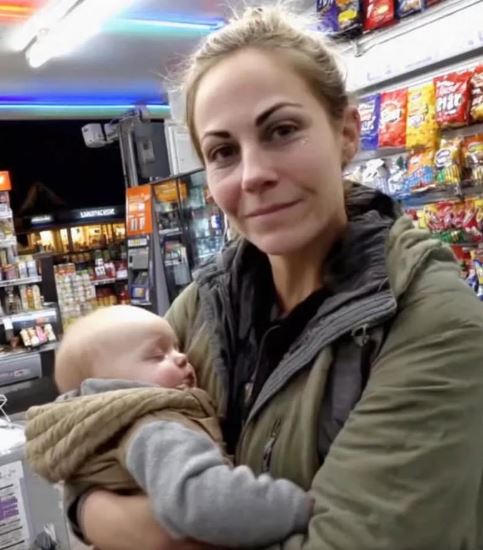
The late shift at a gas station can feel like living in a bubble, a world of fluorescent lights and the low hum of coolers, where most customers are just fleeting shadows in the night. One evening, a young mother came in, her small son asleep on her shoulder. Her eyes held a deep weariness that went beyond simple tiredness. She gathered a few essentials—milk, bread, diapers—but when she went to pay, she fell short. It was only four dollars, but the look on her face was one of pure devastation. It was a look that said this small shortage was the final straw in a long series of hardships. Without a second thought, I pulled four singles from my own wallet and slid them into the register. “It’s fine,” I told her. “Just get home safe.” She looked at me, her eyes glistening, whispered a thank you, and vanished into the darkness. By the next morning, I had nearly forgotten the entire encounter.
A week later, my routine was broken by a plain white envelope left at the counter with my name on it. There was no return address. Puzzled, I opened it to find a check for five thousand dollars and a handwritten note. It was from the woman’s parents, thanking me for my kindness to their daughter, Emily. The note explained that my small act had meant more than I could know and included an invitation to lunch. I was stunned, convinced there had been some terrible mistake. When I told my wife, Lydia, she was just as shocked, but her response was immediate. “You have to go,” she insisted. “This is important. They need to do this.”
That Sunday, I drove to an address in a quiet, well-kept neighborhood. An older couple, Robert and Margaret, greeted me warmly on their porch. Over a meal, they shared the story I had not known. Their daughter, Emily, had just escaped a dangerous marriage with her son and the clothes on their backs. She was terrified, exhausted, and running on empty, both emotionally and financially. My gas station had been her last stop before complete despair. When she couldn’t pay for the diapers and food, it felt like a confirmation of her failure. My four dollars, they explained, did more than cover her bill; it gave her a glimmer of hope and the strength to believe that kindness still existed in the world.
I tried to give the check back, to tell them it was too much, that anyone would have done the same. But Robert was firm. “You didn’t just help our daughter,” he said, his voice thick with emotion. “You helped bring her home to us.” Driving away that afternoon, I was overwhelmed by the ripple effect of a simple good deed. We used the money to pay down some nagging bills, which was a tremendous relief. But the real value was the lesson imprinted on my heart. Now, when I see someone at the gas station who looks like they’re carrying the weight of the world, I remember Emily. I’m reminded that we never know the battles others are fighting, and that a few dollars and a moment of compassion can be a lighthouse for someone lost in a very dark sea.