
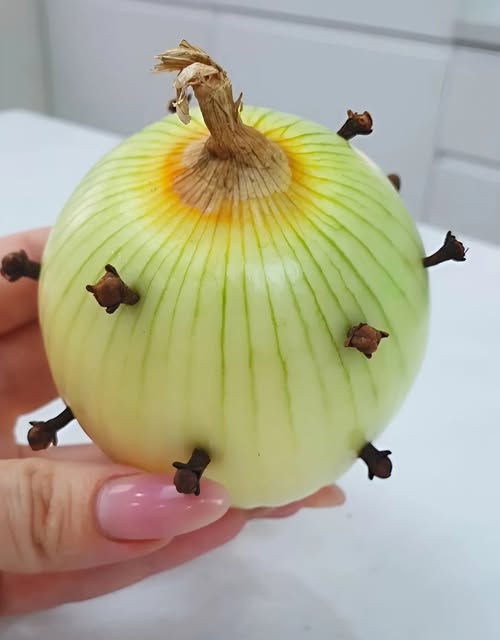
She didn’t call it French, fancy, or even “technique.” She simply fished an onion from the basket, stabbed it six times with cloves the way other women pricked pastry, and dropped the spiky bulb into whatever was bubbling. To me it looked like kitchen voodoo. To her it was Tuesday.
Years later I learned the official name—oignon piqué—and that Michelin kitchens use the same trick for velvety béchamel. But no textbook ever explained the real magic: those tiny brown nails turn an ordinary pot into a time machine. Simmer the onion for thirty minutes and the clove’s eugenol leaks out slowly, tasting first of warm orange peel, then of old Christmas, finally of the moment I stood on a stool and Grandma let me stir.
Retrieving the onion at the end is part of the spell. Lift it out, cloves embedded like flags on a conquered planet, and the broth keeps the memory but loses the bite. No one chips a tooth, no one hits a bitter pocket—just a whisper that says, “Someone cared enough to tuck flavor where you’d least expect it.”
These days I cook faster, louder, dumber. But when the house smells thin or my heart feels thinner, I still spear an onion, count to six, and let the water remember for me. The clove-studded bulb bobs once, twice, then settles in for the long, slow work of making dinner—and making me—taste like patience again.