
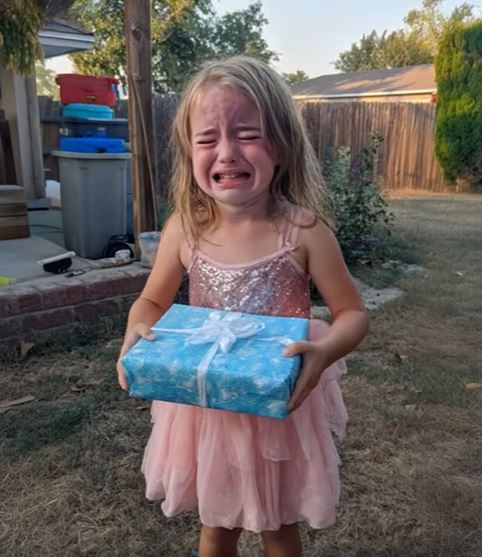
Family parties are meant to be highlights of a child’s life, full of cake, games, and happy memories. So, when my six-year-old daughter returned from her cousin’s birthday celebration not with a sugar rush, but with quiet tears, my heart sank. She had been so excited, wearing her favorite sparkly dress and carefully carrying the present she helped pick out. The joy had been stolen from her, not by a fellow child, but by a painful decision from my mother-in-law. She had deemed my daughter an outsider and sent her away from the festivities. The reason was a truth I never thought I’d have to confront so directly: our daughter is adopted.
Hearing her whisper that she was told she “wasn’t real family” felt like a physical blow. The person who was supposed to be a source of unconditional love had instead handed her a lesson in rejection. In that raw moment, my parenting instincts shifted into overdrive. I realized that comforting her wasn’t enough; I had to actively defend her sense of belonging. The choice was clear: let the hurt define her, or redefine what family means for her. We decided to throw our own gathering, a vibrant picnic filled with every relative and friend who sees her for the wonderful child she is. Watching her play freely, completely accepted and adored, was the healing balm we all needed. It was a powerful declaration that family is a circle built on love, not just biology.
This experience forced a difficult but necessary conversation within our family. While apologies have been offered and we are navigating a path toward healing, my trust is now guarded. The most profound lesson, however, came from my daughter herself, who embraced forgiveness with a grace that humbled me. The entire ordeal solidified a core belief for me: a child’s place in a family is a given, not something to be granted or earned. Our most critical job as parents is to stand as an unshakable wall between our children and anyone who tries to tell them otherwise.